
The Plovers are back
Plovers, limicolous birds freshly arrived from their African wintering grounds, are back at Cordouan. Indeed, they have chosen the vast expanses of sand off Cordouan to build their nests.
The eggs, which resemble large pebbles, are currently being incubated. Other broods could also take place until 15 July.
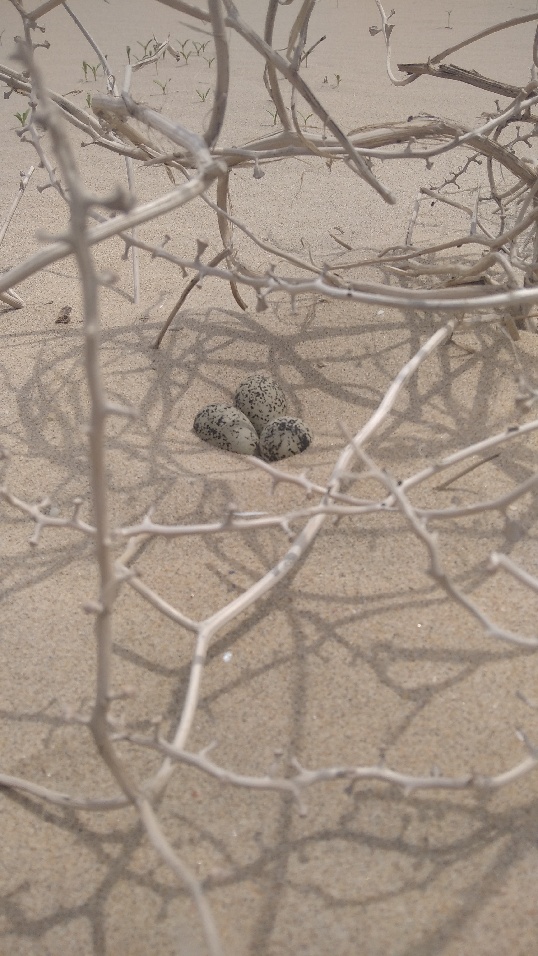
Watch your step !
Let’s protect these chicks, living treasures of our shores, by adopting the right reflexes! Be vigilant so as not to disturb their reproduction (crushed eggs, trampled broods, chicks separated from their parents, or even devoured by dogs not kept on a lead).
The Sea Nature Park presents you with ways to protect this vulnerable species
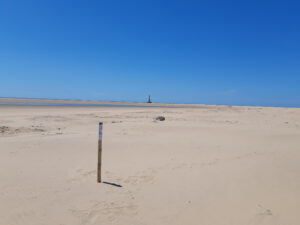
Beaconing of the island by the Sea nature park of Gironde estuary and Pertuis sea – May 21, 2022 (c) VL
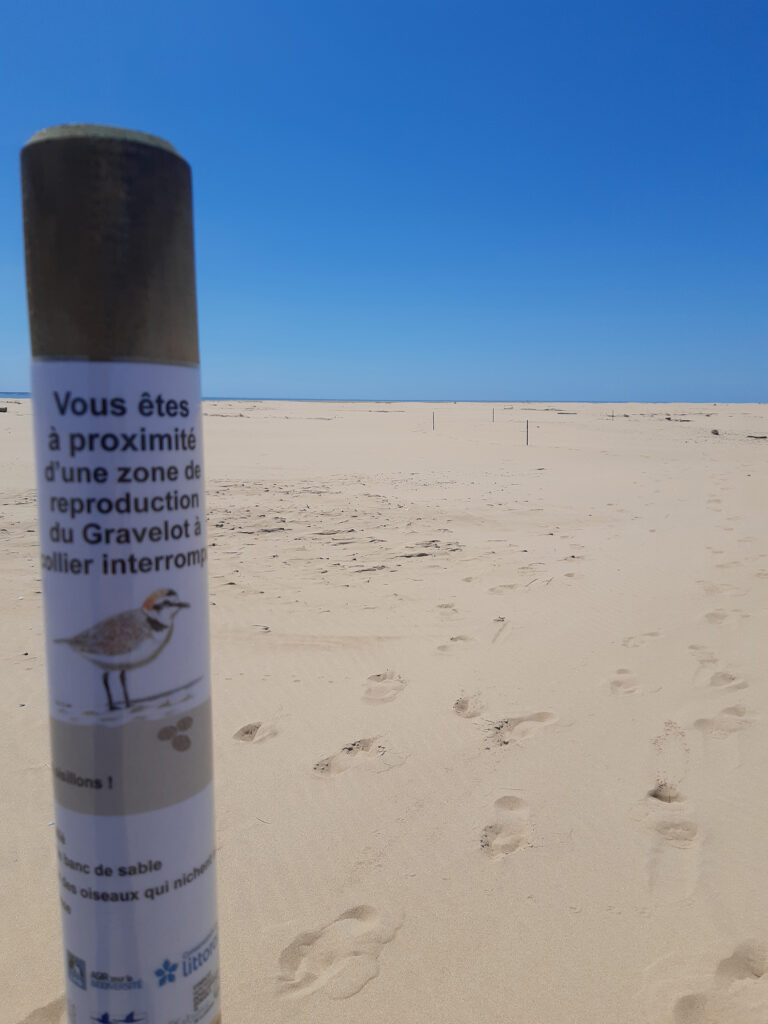
A small shorebird that blends into the landscape
The Ringed Plover is a small bird that lives on the edge of beaches. Its size varies between 15 and 17 centimetres. It has a wingspan of up to 34 centimetres and weighs between 32 and 53 grams. It has a short bill and black legs.
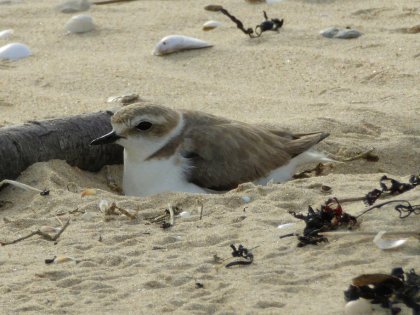
The upper part of the body is plain sandy brown, while the underside is pure white. During the breeding season, adults can be recognised by their half collar, which is black for the male and brown for the female. The male can be distinguished by the black lores (areas between the eye and the base of the bill) and parotia (parts of the plumage covering the cheeks and ear holes) as well as a black bar above the forehead, a brownish cap with reddish tones on the nape of the neck. This plumage makes the bird particularly difficult to spot on the sand when it is motionless and lurking on the ground.
This shorebird feeds by hunting on sight in the beach mudflats. It consumes small invertebrates such as insects (beetles, diptera, caddisflies), crustaceans (talitra) as well as marine worms and molluscs.
Colony breeding
The birds arrive at their breeding grounds in mid-March, and the first eggs are laid from late March to early April.
On the upper parts of the beach near the tide lines, the male digs several small holes. The one chosen by the female will be lined with shells and small pebbles.
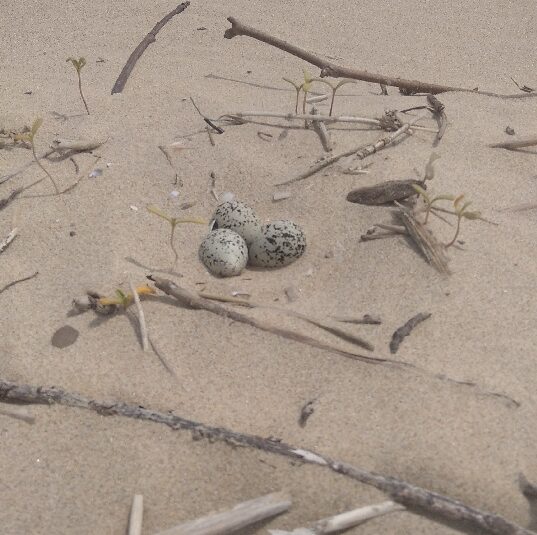
The clutch contains 2 to 3 eggs which are incubated for 24 to 27 days. The young are completely nesting, they can move around like adults from birth. They fledge between 27 and 41 days after hatching.
This species forms loose colonies. Single nesters are rare.